
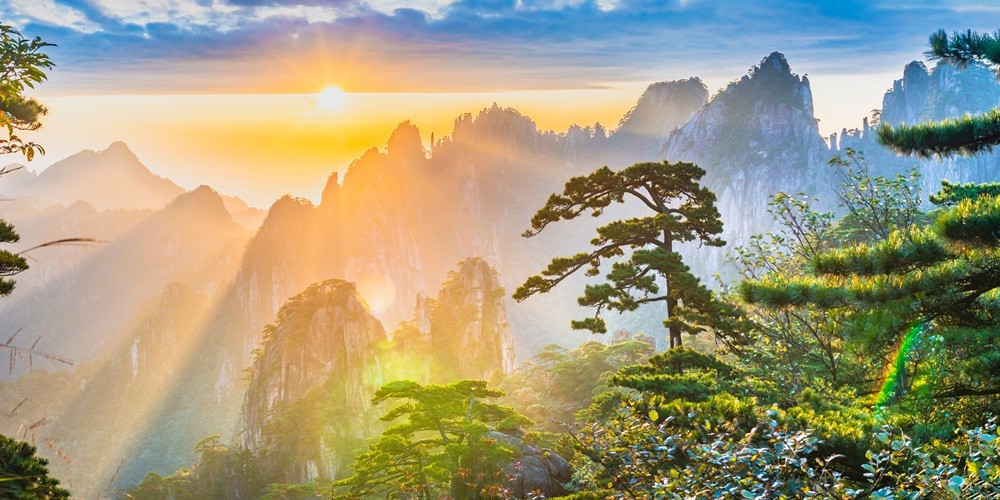
Recognized as a UNESCO World Heritage Site, it offers a perfect mix of hiking adventure, cultural heritage, and unforgettable scenery for international travelers exploring China.
Why Visit Mount Huangshan?
1. UNESCO World Heritage Site
Mount Huangshan was designated a UNESCO World Cultural and Natural Heritage Site in 1990. Its landscape has shaped traditional Chinese ink painting and continues to symbolize the beauty of classical Chinese aesthetics.
For travelers interested in photography, landscape art, or East Asian culture, Huangshan is more than a mountain — it is a living masterpiece.
2. The Famous “Four Wonders” of Huangshan
Mount Huangshan is known for its Four Natural Wonders:
- Strangely-shaped granite peaks
- Ancient and resilient pine trees
- Sea of clouds
- Hot springs
⛰️ Granite Peaks
With 72 major peaks, the most famous include:
- Lotus Peak – The highest peak (1,864 meters)
- Bright Summit Peak – Popular sunrise viewpoint
- Celestial Capital Peak – Known for dramatic cliffside paths
The jagged rock formations create a surreal, almost otherworldly atmosphere.
🌲 Ancient Pine Trees
The most iconic tree is the Welcoming-Guest Pine, estimated to be over 800 years old. It stands as a symbol of hospitality in Chinese culture and is one of the most photographed trees in China.
☁️ Sea of Clouds
After rainfall or during early mornings, valleys fill with thick mist, creating the illusion that peaks are floating above a sea of clouds — a scene often seen in traditional Chinese paintings.
The best times to see this phenomenon are spring and autumn.
♨️ Hot Springs
At the mountain’s base, visitors can relax in natural hot springs, perfect after a long day of hiking.
Hiking and Travel Experience
Mount Huangshan offers well-developed walking paths, stone staircases, and cable cars. Visitors can choose between:
- Challenging full-day hikes
- Two-day overnight trips (highly recommended)
- Scenic cable car rides for easier access
Many travelers stay overnight at mountain-top hotels to watch both sunset and sunrise — considered the highlight of any Huangshan trip.
Best Time to Visit Mount Huangshan
- Spring (March–May): Blooming flowers and frequent cloud seas
- Summer (June–August): Lush greenery, but more tourists
- Autumn (September–November): Clear skies and comfortable weather
- Winter (December–February): Snow-covered peaks create magical scenery
Each season offers a unique landscape.
Nearby Attractions
🏘️ Ancient Villages
Close to Huangshan are two famous UNESCO-listed villages:
- Hongcun
- Xidi
These villages feature traditional Hui-style architecture, white walls, black tiles, and peaceful ponds — perfect for cultural exploration and photography.
How to Get to Mount Huangshan
- Fly to Huangshan City
- Take high-speed rail from Shanghai, Hangzhou, or Beijing
- Bus or taxi to the mountain scenic area (about 1 hour from downtown)
Travel Tips for International Visitors
- Wear proper hiking shoes (many stone steps)
- Bring layers — temperatures change quickly at high altitude
- Stay overnight on the mountain for sunrise views
- Visit early in the morning to avoid crowds
- Check weather forecast for best cloud-sea chances
Why Mount Huangshan Should Be on Your China Travel List
Mount Huangshan combines dramatic natural beauty with deep cultural meaning. It is not just a hiking destination — it is a symbol of China’s artistic soul and natural grandeur.
For foreign travelers seeking iconic scenery, unique photo opportunities, and authentic cultural experiences, Yellow Mountain is an unforgettable highlight of any China itinerary.