
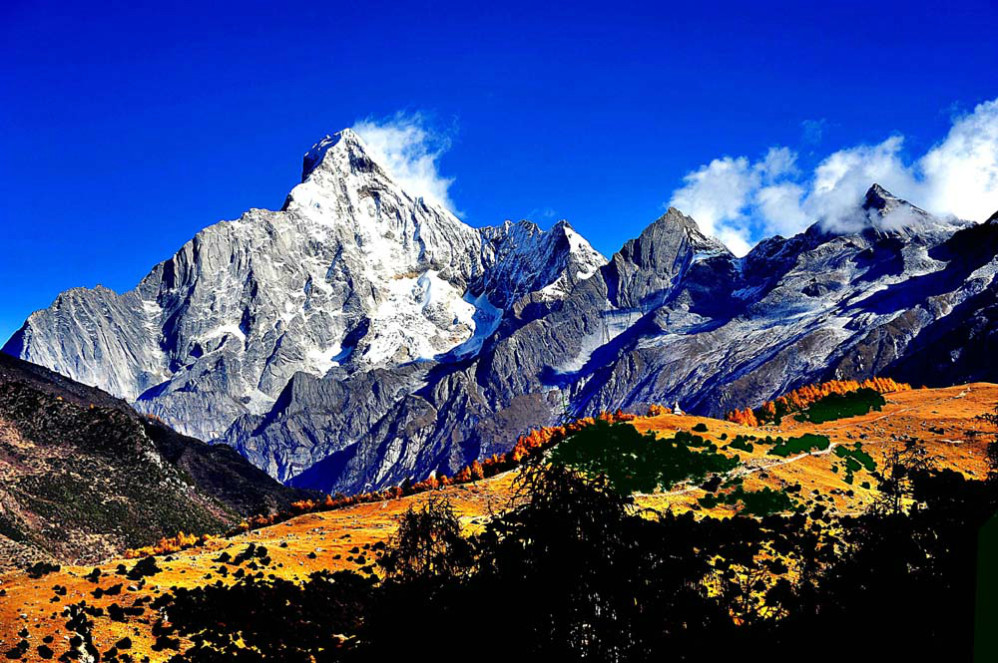
For foreign travelers seeking a less crowded alternative to the Himalayas or the Alps, Mount Siguniang offers high-altitude adventure, authentic ethnic culture, and stunning photography — all within a few hours of Chengdu.
🌄 1. Why Visit Mount Siguniang?
1️⃣ The Four Sisters Peaks
The name “Siguniang” refers to four majestic peaks standing side by side:
- Yaomei Peak (6,250m) – The tallest and most technical climb
- Three additional sister peaks ranging from 5,355m to 5,664m
Yaomei Peak is often called the “Queen of Sichuan Mountains” due to its elegant pyramid shape and dramatic ridgelines.
Unlike Everest Base Camp or the Alps, this region remains relatively undiscovered by Western tourists — making it ideal for travelers who value raw nature and solitude.
🏞️ 2. Three Stunning Valleys to Explore
Mount Siguniang Scenic Area is composed of three main valleys, each offering a different experience.
🌲 Shuangqiao Valley (双桥沟) – The Most Accessible
- Paved roads and shuttle buses
- Snow peaks, meadows, red rock cliffs
- Ideal for casual visitors and photographers
- Great year-round destination
Perfect if you want stunning scenery without intense hiking.
🥾 Changping Valley (长坪沟) – Classic Trekking Route
- Traditional Tibetan horse caravans
- Forests, glaciers, and alpine rivers
- Multi-day trekking options
- Connects to Bipenggou via long-distance hike
A fantastic option for intermediate trekkers.
🏔️ Haizi Valley (海子沟) – Wild & Remote
- More rugged and less developed
- Alpine lakes (“Haizi” means sea/lake)
- Camping opportunities
- Best sunrise views of Yaomei Peak
Perfect for adventurous travelers seeking solitude.
🧭 3. Adventure Activities
Mount Siguniang is a growing hub for:
- 🧗♂️ Rock climbing (international-level routes)
- 🏔️ Mountaineering (technical alpine climbs)
- 🥾 Multi-day trekking
- 🚵 Mountain biking
- 📸 Landscape photography
- 🏕️ High-altitude camping
The region is sometimes compared to Patagonia — but with Tibetan culture and Asian alpine aesthetics.
🧘 4. Tibetan Culture & Local Life
The area around Siguniangshan is home to the Tibetan people (primarily the Jiarong Tibetan community).
Visitors can experience:
- Tibetan-style homestays
- Prayer flags and mountain rituals
- Yak-based cuisine
- Local butter tea
- Small mountain villages untouched by mass tourism
Unlike heavily commercialized destinations, this region retains authenticity and quiet charm.
📅 5. Best Time to Visit
| Season | Experience |
|---|---|
| Spring (Apr–May) | Snow + blooming alpine flowers |
| Summer (Jun–Aug) | Green valleys, best trekking weather |
| Autumn (Sep–Oct) | Golden forests, crystal-clear skies ⭐ Best season |
| Winter (Nov–Mar) | Snowy landscapes, fewer tourists |
Autumn is widely considered the most photogenic season.
🚗 6. How to Get There
From Chengdu:
- 4–5 hours by car (new highway access)
- Public bus options available
- Private transfers recommended for comfort
Nearest airport: Chengdu Shuangliu International Airport.
⚠️ 7. Travel Tips for Foreign Visitors
- Altitude ranges from 3,000m to over 6,000m — allow time to acclimatize
- Bring sun protection (UV is strong at high elevation)
- Cashless payment is common; consider Alipay/WeChat setup
- English is limited — a translation app helps
- Travel insurance recommended for trekking
🌍 8. Why Mount Siguniang Is Perfect for International Travelers
If you’ve already visited:
- The Alps
- The Rockies
- Patagonia
- Nepal
Mount Siguniang offers something different — a blend of Himalayan-scale scenery, Tibetan culture, and relative tranquility.
It is dramatic yet peaceful. Wild yet accessible. Grand yet intimate.
🏁 Final Thoughts
Mount Siguniang is not just a mountain — it’s an experience of untouched alpine beauty at the edge of the Tibetan Plateau.
For travelers seeking China beyond megacities and famous icons, Siguniangshan is one of the country’s best-kept secrets.
If you are planning a trip to western China, add Mount Siguniang to your itinerary — before the world fully discovers it.