
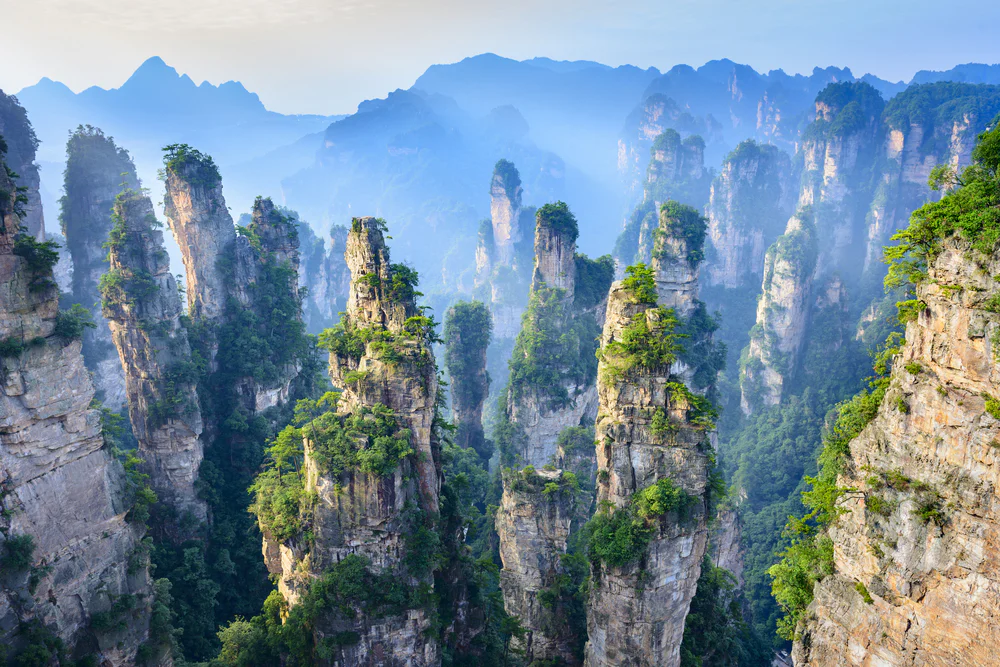
With mist-covered peaks, deep ravines, glass bridges, and scenic hiking trails, Zhangjiajie is a must-visit destination for adventurous travelers seeking dramatic scenery and unique geological formations.
Why Visit Zhangjiajie National Forest Park?
1. The “Avatar” Mountains
Zhangjiajie’s most iconic feature is its thousands of vertical sandstone pillars, some rising over 200 meters (650 feet) high. The most famous, formerly known as the “Southern Sky Column,” was renamed Avatar Hallelujah Mountain after the global success of Avatar. When fog drifts between the pillars, the landscape appears surreal—almost floating in the clouds.
This rare landform is part of the larger Wulingyuan Scenic Area, a UNESCO World Heritage Site known for its unique karst and sandstone geology.
2. Tianzi Mountain: A Sea of Clouds
The spectacular Tianzi Mountain offers panoramic viewpoints of the stone pillars stretching endlessly into the horizon. Early mornings are especially magical when a “sea of clouds” fills the valleys below. A cable car ride provides sweeping aerial views, making it ideal for photographers and first-time visitors.
3. Golden Whip Stream: Peaceful Forest Walks
For those who prefer gentle exploration, Golden Whip Stream offers a tranquil 7.5 km (4.6 miles) walking path through lush forests and beside crystal-clear water. Wild monkeys are commonly spotted along the route—keep your belongings secure!
4. Zhangjiajie Glass Bridge & Grand Canyon
For thrill-seekers, the Zhangjiajie Glass Bridge in the nearby Zhangjiajie Grand Canyon stretches 430 meters across a dramatic gorge. Once the world’s longest and highest glass-bottom bridge, it offers heart-pounding views straight down into the canyon.
Best Time to Visit
- Spring (April–June): Mild weather and misty scenery
- Autumn (September–November): Clear skies and colorful foliage
- Winter (December–February): Snow-covered pillars create a fairytale landscape
- Summer (July–August): Lush greenery but expect crowds and humidity
For the best experience, visit early in the morning to avoid tour groups and capture dramatic lighting.
How to Get There
- By Air: Fly into Zhangjiajie Hehua International Airport
- By Train: High-speed trains connect Zhangjiajie with major cities like Changsha
- From the City: Local buses and taxis take you to the park entrance in about 30–40 minutes
Travel Tips for Foreign Visitors
- Purchase a multi-day ticket (valid for 4 days) to explore at a relaxed pace.
- Wear comfortable hiking shoes—some trails include steep staircases.
- Bring light rain gear; weather can change quickly in the mountains.
- Download offline maps or use translation apps for easier navigation.
- Consider staying inside the Wulingyuan area for early park access.
Where to Stay
Most travelers stay in Wulingyuan Town near the east gate for convenience. Accommodation ranges from boutique guesthouses to international-standard hotels, offering easy access to major attractions within the park.
Why Zhangjiajie Should Be on Your China Itinerary
Whether you are a nature lover, photographer, adventure seeker, or film fan, Zhangjiajie National Forest Park offers a landscape unlike anywhere else on Earth. Its dramatic stone forests, cloud-covered peaks, and thrilling glass walkways combine to create one of Asia’s most unforgettable travel experiences.
If you’re planning a trip to China, don’t miss the chance to explore this otherworldly masterpiece in Hunan Province.